



- 10/09/2026
- Author
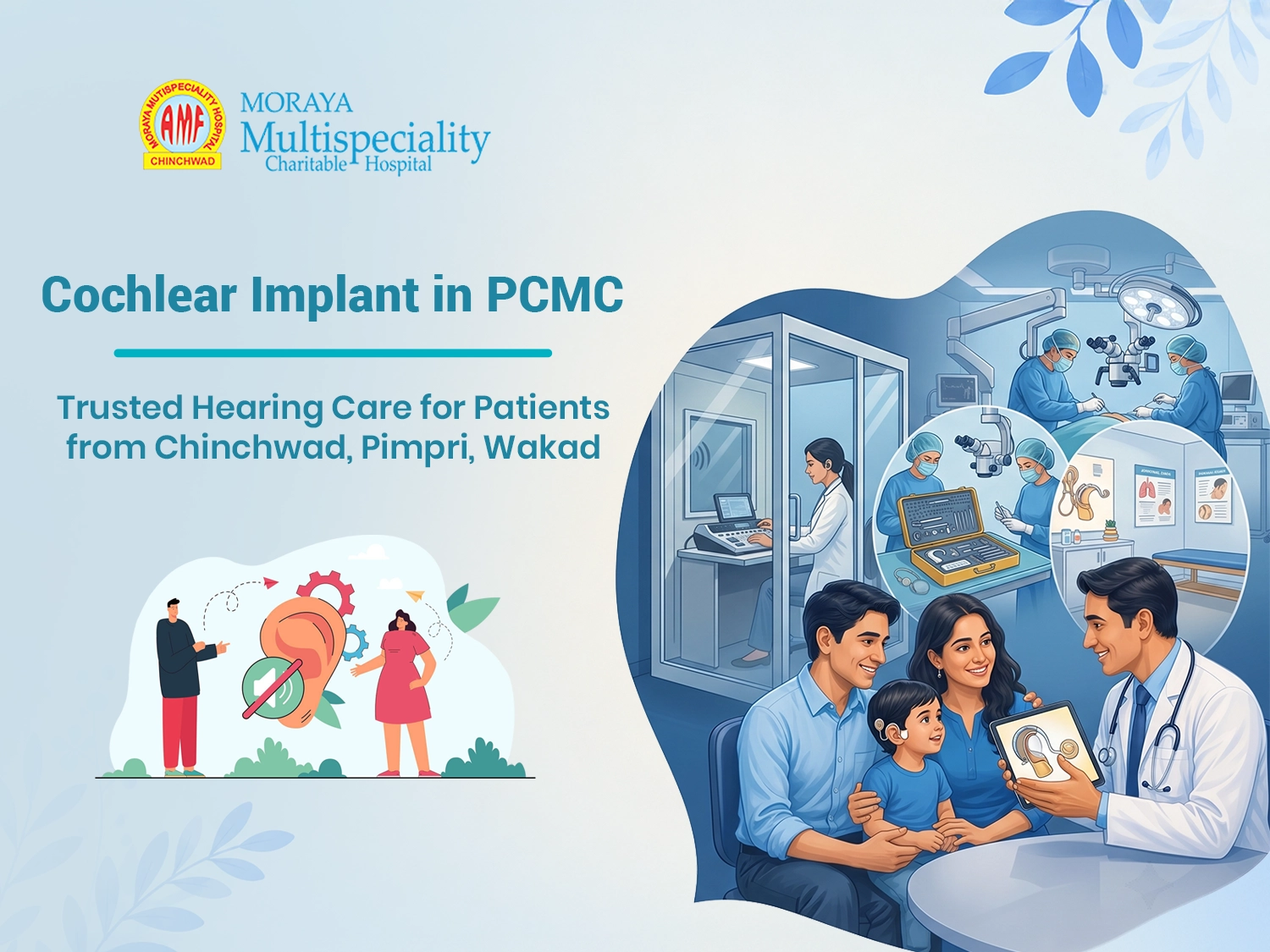
- Cochlear Implant in PCMC
Introduction
Hearing plays an important role in communication, learning, work and everyday life.
For people with severe to profound hearing loss who receive limited benefit from
conventional hearing aids, a cochlear implant may provide another option for hearing
rehabilitation. Choosing the right hospital and an experienced ENT and cochlear
implant specialist is an important part of this journey.
For patients looking for Cochlear Implant in PCMC, access to specialised ENT care
closer to home can make evaluation, surgery and long-term follow-up more convenient.
Patients from Chinchwad, Pimpri, Wakad, Akurdi, Nigdi, Ravet and nearby areas can
consider a comprehensive hearing-care centre where assessment, treatment planning
and rehabilitation are coordinated.
What Is a Cochlear Implant?
A cochlear implant is an electronic hearing device designed for people with
significant sensorineural hearing loss who may not receive adequate benefit from
hearing aids. Unlike a conventional hearing aid, which primarily amplifies sound, a
cochlear implant system works by converting sound into electrical signals that
stimulate the auditory nerve.
A cochlear implant generally consists of an external sound processor and an
implanted internal component. Before recommending implantation, an ENT and cochlear
implant team evaluates the patient's hearing, medical history, ear anatomy and
overall suitability.
The decision is individualised. Not every person with hearing loss requires a
cochlear implant, which is why a detailed assessment by an experienced specialist is
essential.
Who May Benefit from a Cochlear Implant?
Cochlear implantation may be considered for selected children and adults with severe
to profound hearing loss when hearing aids do not provide sufficient speech
understanding or auditory benefit.
For children, early identification and intervention can be particularly important
because hearing contributes significantly to speech, language and educational
development. Adults with significant hearing loss may also be evaluated when hearing
aids are no longer providing adequate communication benefit.
A specialist assessment can help determine:
- ✔ The degree and type of hearing loss
- ✔ Hearing-aid benefit
- ✔ Speech and language development in children
- ✔ Speech perception in adults
- ✔ Ear and cochlear anatomy
- ✔ Medical suitability for surgery
- ✔ Expected benefits and rehabilitation requirements
Cochlear Implant in PCMC for Patients from Chinchwad and Pimpri
Patients searching for Cochlear Implant in PCMC often prefer healthcare services that
are accessible from their local area. Chinchwad and Pimpri are well-connected parts
of the Pimpri-Chinchwad region, making specialised ENT and hearing services locally
accessible to many families.
A local cochlear implant centre can also make follow-up care more convenient.
Cochlear implantation is not simply a surgical procedure; patients typically require
ongoing programming, hearing assessments, auditory rehabilitation and monitoring
after implantation.
For families from Chinchwad, Pimpri, Wakad, Akurdi, Nigdi and Ravet, choosing a
hospital with coordinated ENT, audiology and rehabilitation support can help
simplify the overall treatment journey.
Why Specialist Evaluation Matters
Cochlear implantation requires careful patient selection and planning. A detailed
evaluation helps the medical team understand whether an implant is appropriate and
what outcomes may reasonably be expected.
An ENT and cochlear implant specialist may coordinate with audiologists and other
professionals to assess hearing and communication needs. For children, the
assessment may also consider developmental milestones, speech and language abilities
and previous hearing-aid use.
Patients should ask about:
- ✔ Experience in cochlear implant evaluation and surgery
- ✔ Audiology and hearing assessment facilities
- ✔ Pre-operative investigations
- ✔ Implant technology and available options
- ✔ Post-operative programming
- ✔ Auditory rehabilitation
- ✔ Long-term follow-up
- ✔ Support for children and families
Taking time to understand these factors can help patients make an informed decision about their hearing-care journey.
Cochlear Implant Care for Children
Children with significant hearing loss may require a different approach from adults.
Early hearing assessment, appropriate amplification and timely specialist
intervention can support auditory and communication development.
When cochlear implantation is recommended, parents should understand that surgery is
only one part of the process. Following implantation, the device needs to be
activated and programmed, and the child generally requires structured auditory
rehabilitation.
Regular follow-up helps the clinical team monitor progress and make adjustments
according to the child's hearing and communication development.
Parents considering Cochlear Implant in PCMC should therefore look for a centre that
can provide not only surgical expertise but also appropriate audiological assessment
and continuing support.
Cochlear Implant Care for Adults
Adults with severe hearing loss may experience difficulty understanding
conversations, using telephones, participating in meetings or communicating in noisy
environments. When conventional hearing aids provide insufficient benefit, cochlear
implant evaluation may be considered.
An adult assessment can include hearing tests, speech perception testing, medical
evaluation and imaging where required. The specialist team uses these findings to
determine whether cochlear implantation could be appropriate.
Post-operative rehabilitation and device programming remain important for adults as
well. The time required to adapt to the implant varies between individuals.
What to Expect During the Cochlear Implant Journey
A typical cochlear implant pathway may include several stages:
1. ENT Consultation
The process begins with a detailed consultation to understand the patient's hearing
history and current difficulties.
2. Hearing and Audiological Assessment
Comprehensive hearing tests help determine the degree of hearing loss and the level
of benefit obtained from hearing aids.
3. Medical and Radiological Evaluation
The specialist may recommend additional investigations, including imaging, to assess
the anatomy of the ear and cochlea and support surgical planning.
4. Treatment Planning
The cochlear implant team discusses suitability, expected outcomes, implant options,
surgery and rehabilitation requirements.
5. Cochlear Implant Surgery
If implantation is recommended and the patient is medically suitable, the implant is
surgically placed by the specialist team.
6. Activation and Programming
After the appropriate healing period, the external processor is activated and
programmed according to the patient's requirements.
7. Rehabilitation and Follow-Up
Regular programming, hearing assessments and auditory rehabilitation are important
for making effective use of the implant.
Choosing a Cochlear Implant Centre in PCMC
When searching for a Cochlear Implant Hospital in PCMC, patients should look beyond
the procedure itself. A comprehensive approach that combines specialist ENT care,
audiology, technology, surgery and follow-up can provide a more complete treatment
experience.
For patients from Chinchwad, Pimpri, Wakad and surrounding areas, accessibility is
another practical consideration. Regular appointments may be required before and
after implantation, so choosing a conveniently located hospital can make continuing
care easier for patients and families.
Advanced ENT and Cochlear Implant Care at Moraya
Moraya Multispeciality Charitable Hospital, Chinchwad provides specialised healthcare
services for patients in Pimpri-Chinchwad and nearby areas. Its ENT services include
evaluation and management of hearing-related conditions, with cochlear implant care
forming part of its advanced ENT services.
Patients can consult Dr. Akshay Wachasundar, Consultant ENT & Cochlear Implant
Surgeon, for evaluation and guidance regarding cochlear implantation and
hearing-loss treatment.
The hospital's location in Chinchwad makes it accessible to patients from Pimpri,
Wakad, Akurdi, Nigdi, Ravet and other nearby parts of PCMC.
Conclusion
For patients searching for Cochlear Implant in PCMC, selecting the right specialist
and healthcare facility is an important decision. A comprehensive approach involving
ENT evaluation, audiology, appropriate technology, surgery, programming and
rehabilitation can help patients navigate their hearing-care journey with greater
confidence.
For patients and families from Chinchwad, Pimpri, Wakad, Akurdi, Nigdi, Ravet and
nearby areas, Moraya
Multispeciality Charitable Hospital, Chinchwad offers access to
specialised ENT and cochlear implant consultation.
Visit Moraya Multispeciality Charitable Hospital, Chinchwad, for professional
evaluation and guidance regarding cochlear implant and hearing-loss treatment.